
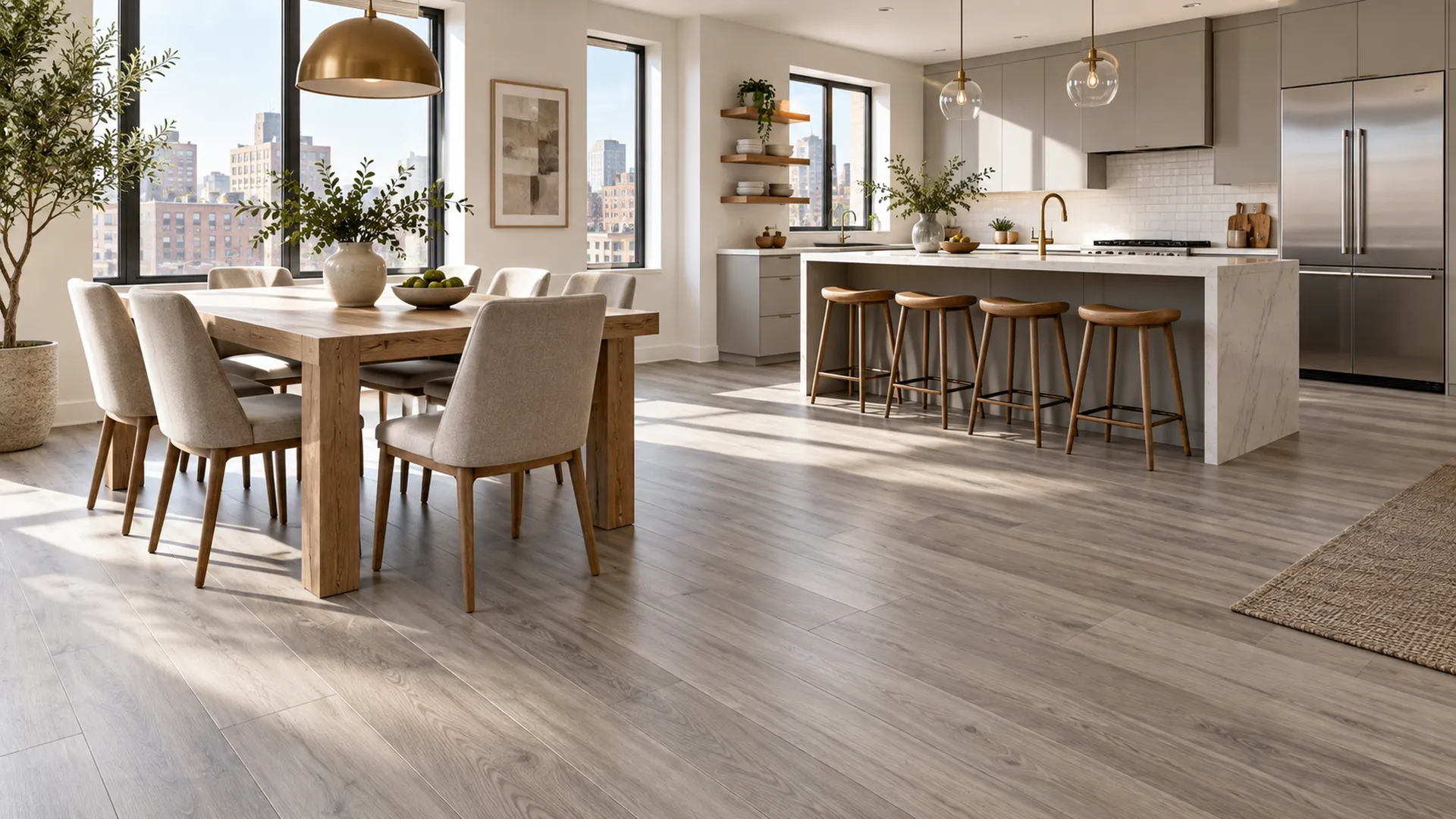
LVP flooring installation in New York City
Luxury vinyl plank laid over a flat base, glued down or floated, with the right underlayment for the apartment below. In all five boroughs.
Luxury vinyl plank, often called LVP, looks like wood and copes with water. That combination is why it has become the floor New Yorkers ask for most in kitchens, bathrooms, basements and busy family rooms.
We install LVP in apartments, co-ops, condos and houses across the five boroughs. It earns its place in rooms where a wood floor would struggle: a kitchen where things get spilled, a bathroom, a basement that is never quite dry, or a home with pets and children. It also goes down over many existing floors, which saves time and mess.
Glue-down or floating
There are two ways to install vinyl plank, and the right one depends on the room and the base.
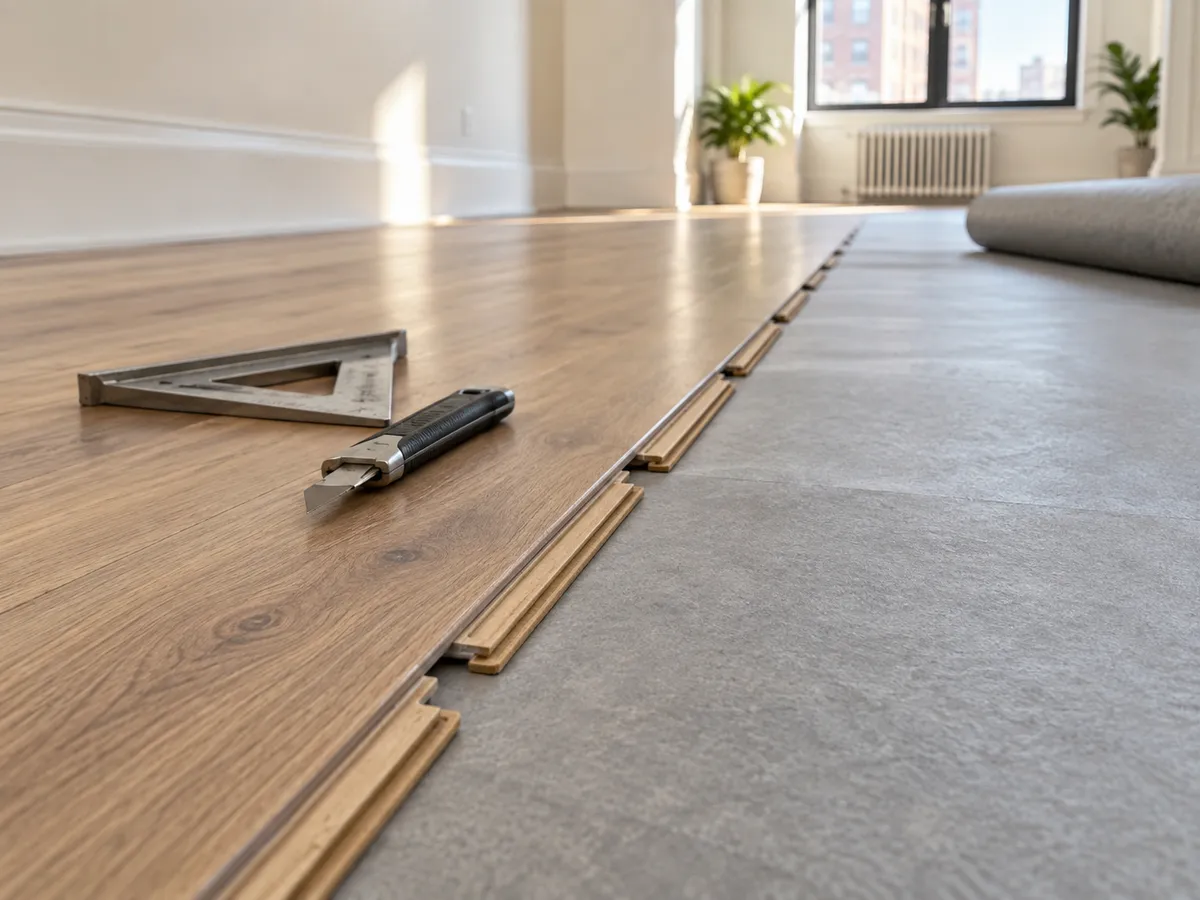
Floating click-lock planks lock together along their edges and rest on the floor without adhesive. They go down quickly, can sit over a flat existing floor, and are the usual choice for living areas and bedrooms. A floating floor needs a small gap at the walls and around radiators so it can move with the seasons.
Glue-down planks are bonded to the subfloor. They suit large open rooms, spaces with heavy furniture or rolling chairs, and areas where the floor must feel completely solid underfoot. Glue-down needs a very clean, smooth base, so preparation takes longer.
We recommend one or the other after we have seen the room, measured it and checked what is underneath.
Sound and the unit below
In an apartment, a hard floor is also a neighbor question. Footsteps on vinyl plank carry to the unit below unless something soft sits underneath. That is the job of the underlayment, a thin acoustic layer under floating planks. Many planks come with a pad already attached, and some rooms need an extra layer.
If your building has rules about sound or floor covering, we will look at them with you before choosing a product. Many co-op and condo buildings care about this, and area rugs in the right places help as well.
Why a flat base matters most
The most common reason vinyl plank fails is an uneven subfloor. Thin planks follow every dip and hump, joints open over a high spot, and a floating floor can bounce and click where it bridges a low one.
So we check how flat the floor is across the whole room before anything goes down. Low spots are filled with leveling compound, loose boards are screwed down, and old tile or sheet flooring is cleaned and made smooth or taken up. Only then do we lay the planks.
What your LVP installation covers
Measuring and planning
We measure every room and plan the plank direction and the layout, so the rows run straight and the doorways line up.
The old floor
We take up carpet and damaged floors, and prepare sound floors to go under the new planks.
Leveling and underlayment
We level the base and lay the acoustic underlayment the room and the building need.
Edges and thresholds
We cut around radiators and door frames and fit trim and thresholds, including transitions to tile and wood.
How the day goes
We protect and prepare
We protect the hallway and nearby rooms, move what needs moving, and prepare the base.
We lay the planks
Rows go down from the longest straight wall, with joints staggered so the floor looks natural.
We finish the edges
Trim, thresholds and the cuts around radiators and doors are finished last, then we clean up.
You use the room
A floating LVP floor can usually be walked on the same day. We tell you when furniture can go back.
What moves the price
The price of an LVP job depends on the planks you choose, the size of the rooms, whether an old floor has to come up, how much leveling the base needs, and how many doorways, closets and radiators the floor has to work around. Glue-down takes more preparation than floating. Stairs, if you want them to match, are quoted separately because each step is cut and fitted by hand.
We measure and look at the base first, then give you one estimate for the whole job. If you have already chosen a plank, tell us which one and we will build the estimate around it.
LVP installation questions
Is it better to glue or float vinyl plank flooring?
Floating click-lock planks suit most living rooms and bedrooms and can go over a flat existing floor. Glue-down suits large open rooms, heavy furniture and places where the floor must feel completely solid. The base decides as much as the room, so we recommend one after we have checked it.
Does luxury vinyl plank need underlayment?
Most floating planks do, and in an apartment it matters for the neighbors below. Many planks have a pad already attached. Where they do not, or where the building asks for more sound control, we add a thin acoustic underlayment.
Can vinyl plank go over existing tile?
Often, yes, if the tile is flat and firmly stuck down. Deep grout lines are filled so they do not show through. Loose or cracked tile has to come up first.
Can LVP go in a bathroom?
Yes. Vinyl plank copes with water, which makes it a good bathroom floor. We seal the edges around the tub and toilet so water cannot get underneath.
How much does it cost to have vinyl plank installed?
It depends on the planks, the size of the rooms and the state of the base. Removing an old floor and leveling an uneven one make the biggest difference. We measure first and give you an estimate for the whole job.
Thinking about vinyl plank? Let us measure.
Send the room size and a few photos, and we will tell you which install suits it.