
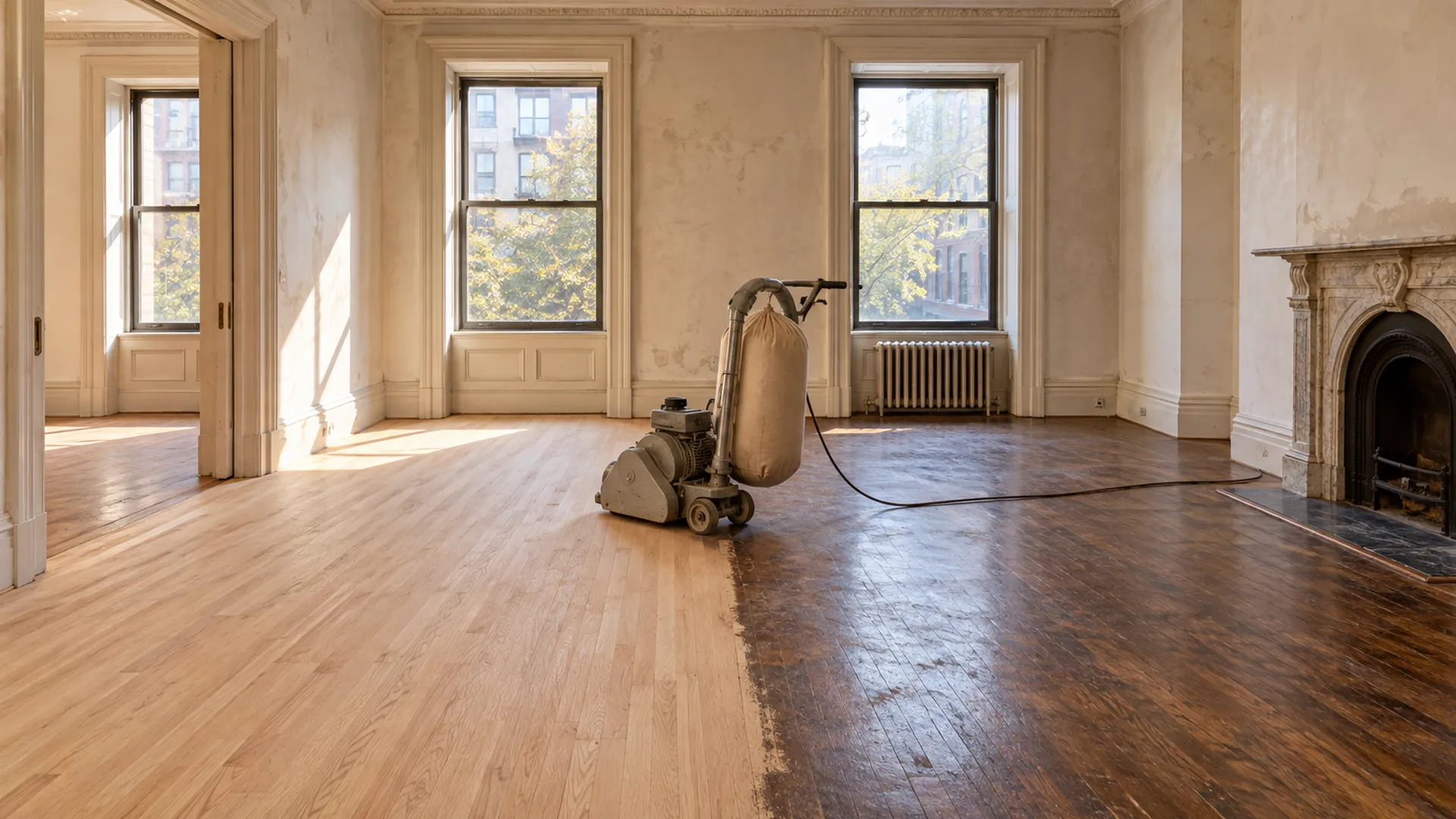
Hardwood floor restoration and refinishing
Recoat, sand and refinish, or restore old parquet, so the wood floor you already have looks and wears like new. Across all five boroughs.
Restoring an old hardwood floor usually beats replacing it, because most old wood floors in New York are better than they look. Under a dull, scratched or gray surface there is usually solid oak with years of life left in it. Restoring it costs less than a new floor, takes less time, and keeps the character that makes a pre-war room what it is.
We restore and refinish hardwood and parquet floors in apartments, brownstones and houses in all five boroughs. The first thing we do is work out what your floor actually needs, because a recoat, a full restoration and a replacement are three very different jobs.
Recoat, restore or replace?
A recoat is for a floor whose finish is dull and lightly scratched but whose wood is not worn. We clean it, lightly abrade the old finish and add a fresh coat. It is quick, dust-light and brings the shine back.
A full sand and refinish is for a floor with deep scratches, gray or bare patches where the finish has worn through, stains, or an old color you want to change. We sand back to fresh wood, repair what needs repairing, stain if you want a new color, and apply new finish.
Replacement is for a floor where the wood is too thin to sand again, badly damaged by water or rot, or worn beyond repair. Even then, we often find that only part of a floor needs replacing and the rest can be restored around it.
A simple sign: if water beads on the floor, a recoat may be enough. If it soaks in and darkens the wood, the finish is gone and the floor needs sanding.
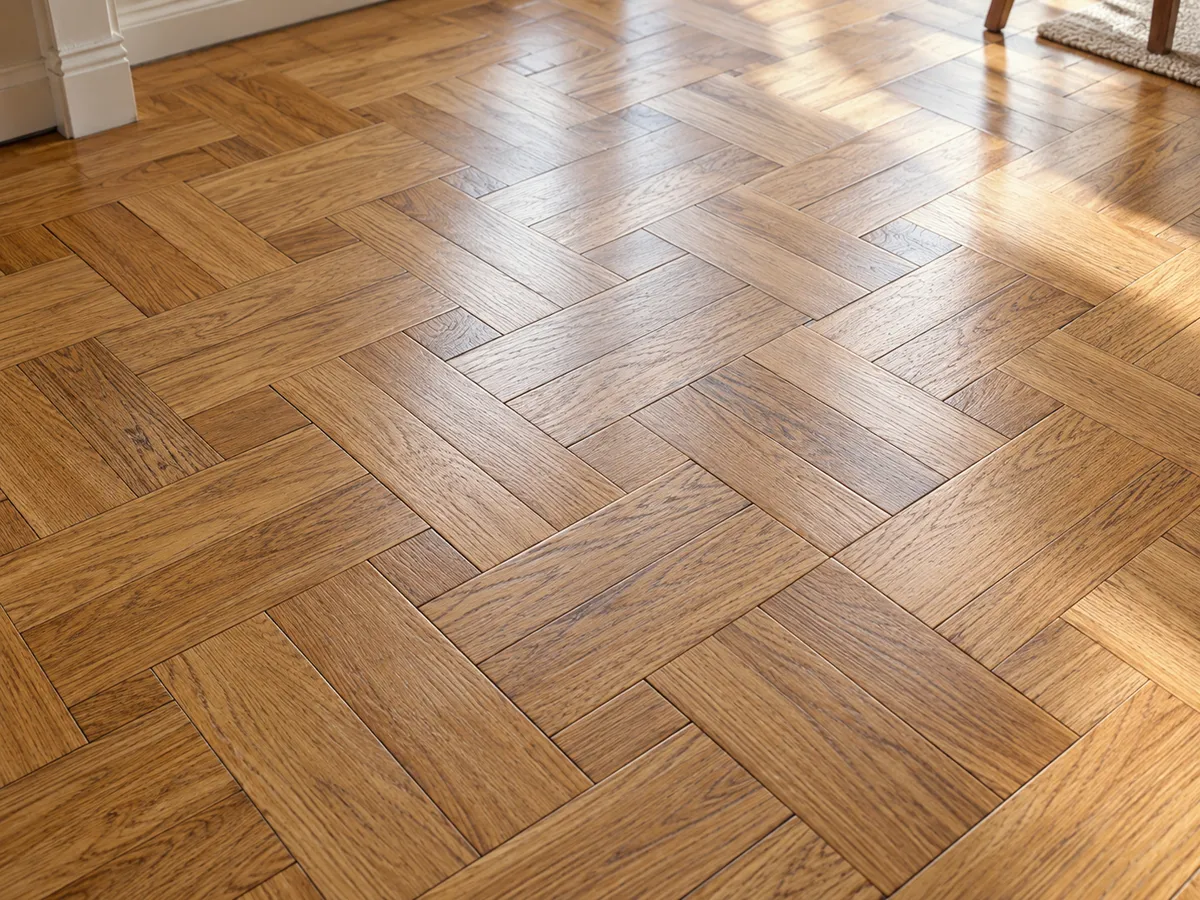
Parquet is usually worth saving
Parquet floors, small blocks of wood set in a pattern, are common in older apartments across the city. They are often dismissed as dated, but a restored parquet floor is one of the best-looking floors in any room. Loose or missing blocks can be reset and replaced, gaps filled, and the whole floor sanded and refinished so the pattern looks crisp again.
Parquet takes a lighter, more careful sanding than straight boards, because the grain runs in several directions. That care is the difference between a pattern that shines and one covered in swirl marks.
Stain, finish and how long the room is out
Stain changes the color of the wood, from natural oak to warm browns, grays and near-black. We apply samples on your floor so you see the real color before we commit, because the same stain looks different on different wood.
The finish protects the wood. Water-based finishes dry clear, keep oak looking natural and let you use the room sooner. Oil-based finishes give a warmer amber tone and take longer to dry. Each coat needs time before the next, so a full refinish takes a few days from sanding to the final coat. You can usually walk on the floor in socks soon after the last coat, and furniture goes back a little later. We give you the exact timing for your job.
Dust you can live with
Sanding a floor used to mean dust in every corner of the home. We use sanders with dust extraction that pull most of the dust straight into a bag or vacuum as the machine works, and we seal off doorways to the rest of the home. It makes living through the work far easier, especially in an apartment.
What your restoration covers
Assessment
We look at the wood, the finish, any damage and how many sandings the floor has left.
Repairs first
We replace damaged boards, reset loose parquet, and fill gaps before any sanding.
Sanding
We sand back to fresh wood with dust extraction, lighter on parquet, careful at the edges.
Stain and finish
We apply your chosen stain, then the coats of finish, with time to dry between each one.
What moves the price
A restoration depends on the size of the floor, its condition, and what it needs. A recoat is the lightest job. A full sand and refinish costs more, and repairs, stain, parquet, stairs and the number of finish coats all change it. We look at the floor first, often from a few photos, and give you one estimate for the whole job.
If a repair has to come first, see our page on wood floor repair. If the floor turns out to be beyond saving, we can install a new hardwood floor instead.
Floor restoration questions
Is it worth restoring hardwood floors?
Usually, yes. If the wood is sound and thick enough to sand, restoring it costs less than a new floor and keeps the original wood. We check how many sandings your floor has left before recommending it.
How long does it take to refinish a hardwood floor?
A full sand and refinish usually takes a few days, because each coat of finish has to dry before the next. A recoat is much quicker. We give you the timing for your floor before we start.
Can engineered wood floors be refinished?
Often, yes, if the top layer of real wood is thick enough. We check it before recommending a sand. A thin top layer may only take a recoat.
Can old parquet be restored?
In most cases, yes. We reset loose blocks, replace missing ones, fill gaps and sand the floor carefully before refinishing it.
Wood floor looking tired? Send us a photo.
We will tell you whether it needs a recoat, a full restoration or repairs first.