
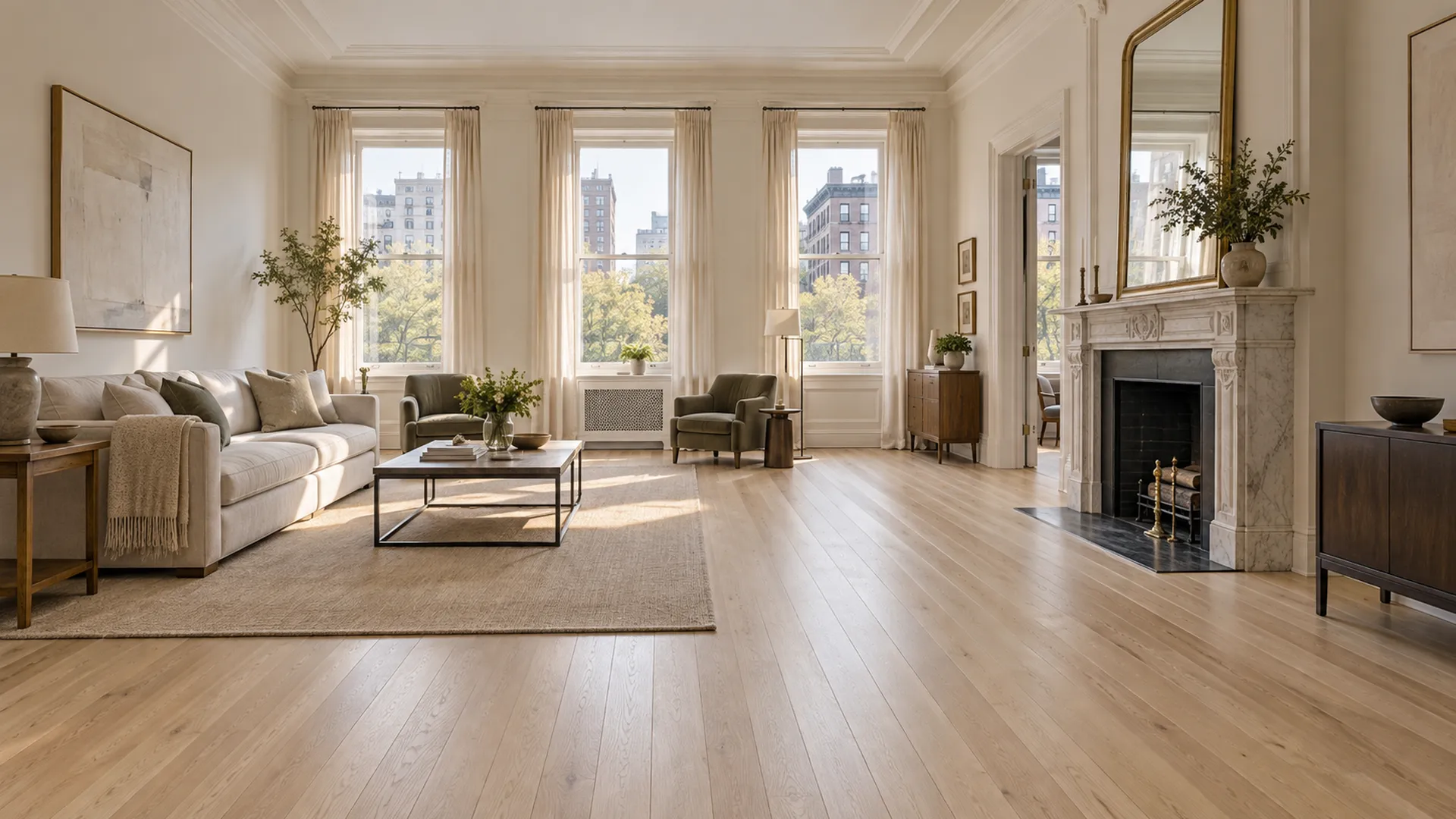
Hardwood floor installation from a contractor who knows New York buildings
Solid or engineered wood, matched to the building it goes into, laid in strip, wide plank, herringbone or parquet across all five boroughs.
A hardwood floor is the one floor that can be sanded and refinished again and again, so a good one outlasts every other part of the room. Getting there starts with a decision most homeowners are never asked about: which kind of wood the building can take.
As a hardwood floor contractor working across the five boroughs, we install new wood floors in pre-war apartments, brownstones, row houses, co-ops, condos and family houses. We help you choose the wood and the pattern, prepare the base, lay the floor and finish it, and we explain what drives the cost before you commit.
Solid or engineered? The building decides
Solid hardwood is one piece of wood from top to bottom. It is nailed into a wood subfloor, and it can be sanded many times over its life. It is the natural choice for pre-war walk-ups, brownstones and row houses, where the floors are wood on joists.
Engineered hardwood has a real wood top layer bonded to a stable base. It moves less with the seasons, and it can be glued down or floated over concrete. That makes it the right choice for the concrete slabs in most post-war elevator buildings and newer condos, where solid wood cannot be nailed. A thick top layer can still be sanded and refinished later.
So the first thing we check is what your floor is built on. From there, the choice of species, width and finish is yours, and we will help you weigh it.
Patterns and widths
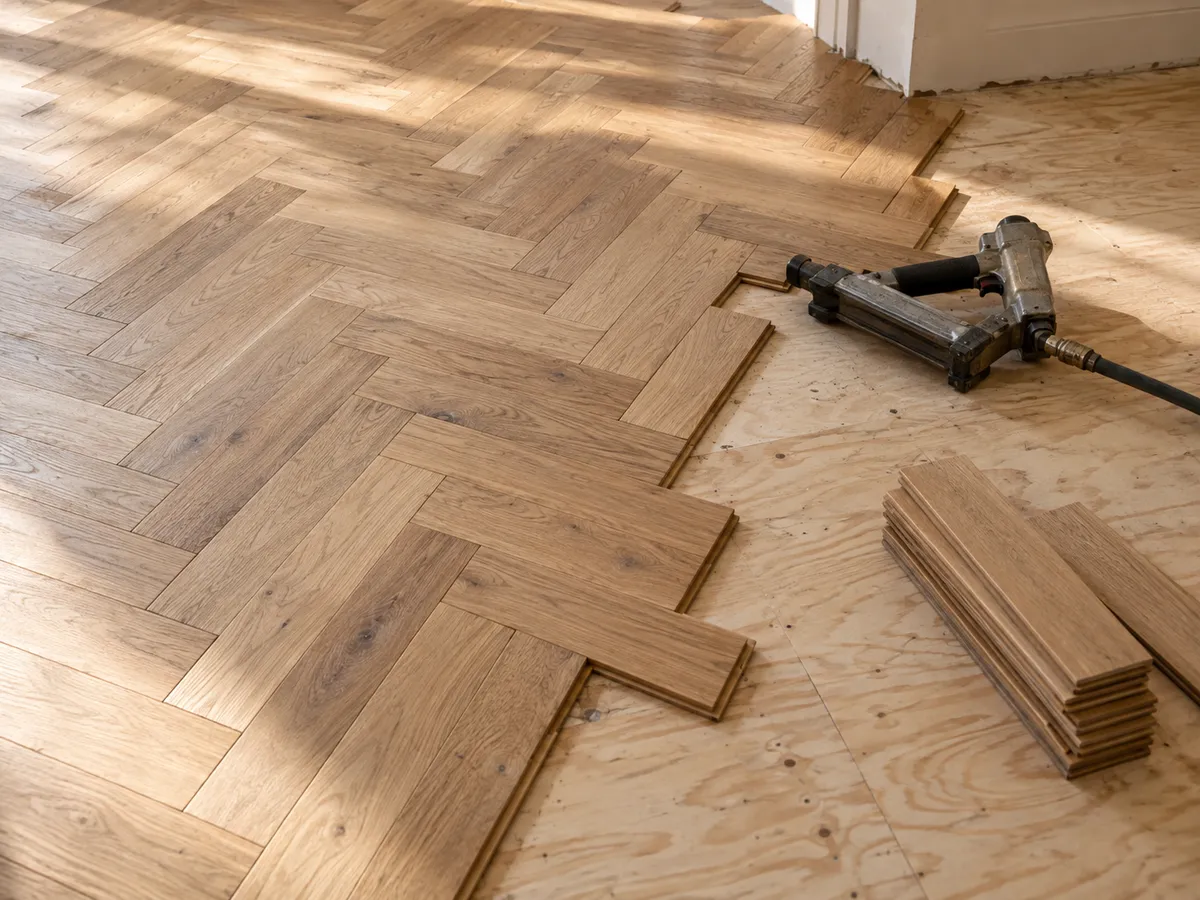
Strip flooring, narrow boards of oak running the length of the room, is the classic pre-war New York floor. Wide plank gives a room a calmer, more modern look with fewer seams. Herringbone and chevron are laid board by board in a zigzag and suit living rooms and hallways that deserve a statement. Parquet sets small blocks in a repeating pattern and is common in older apartments across the city.
Pattern floors take more time and more care to lay, and they need a perfectly square starting line. We plan the layout before the first board goes down, so the pattern runs true through the doorways and meets the walls evenly.
Acclimation and New York winters
Wood takes in and gives off moisture with the seasons, and New York has a big swing between humid summers and dry, steam-heated winters. A floor laid straight off the truck can shrink and gap in its first winter, or cup in its first summer.
So the wood sits in your home before we lay it, long enough to settle to the room's temperature and humidity. We check the moisture of the wood and the subfloor, leave the right expansion space at the walls, and tell you how to look after the floor through the heating season.
What your hardwood installation covers
Choosing the wood
We help you choose solid or engineered, species, width, pattern and finish for the room and the building.
Preparing the base
We take up the old floor, fix squeaks and loose boards, level the base and add underlayment where needed.
Laying the floor
We nail, glue or float the floor as the base requires, cutting it neatly around radiators and door frames.
Finishing
Unfinished wood is sanded and finished on site. Prefinished wood is ready once the trim is on.
How a hardwood job runs
Measure and check the base
We measure and check what the floor sits on, which decides solid or engineered.
Acclimate the wood
The wood settles in your home while we prepare the base.
Lay the floor
Boards or pattern go down from a straight, square starting line.
Finish and trim
We sand and finish on site where needed, fit trim and thresholds, and clean up.
What moves the price
The first thing most people ask about a new wood floor is what it will cost, and it depends on a handful of things. The biggest are the wood itself (species, width and solid or engineered), the pattern (herringbone and parquet take far longer than straight boards), the size of the rooms, and the base. Taking up an old floor, leveling a subfloor, and finishing unfinished wood on site all add to the job. Stairs and custom borders are fitted by hand.
We measure, check the base and talk through the wood with you, then give you one estimate for the whole floor.
Hardwood installation questions
Should I choose solid or engineered hardwood for an apartment?
It depends on what the floor sits on. Over a wood subfloor, solid wood can be nailed down. Over a concrete slab, which most post-war buildings have, engineered wood is the right choice because it can be glued or floated.
How much does a hardwood floor contractor charge?
It depends on the wood, the pattern, the size of the rooms and the base. Removing an old floor and finishing wood on site add to the job. We measure first and give you an estimate for the whole floor.
How long does it take to install a hardwood floor?
The wood first needs time to settle in your home. Laying a prefinished floor in a typical room often takes a day or two, and an unfinished floor needs extra days to sand and finish. We give you the timing for your job before we start.
Want a new wood floor? We start with the base.
Tell us about the rooms and the building, and we will recommend the right wood.