
Wood floor repair, including water damage
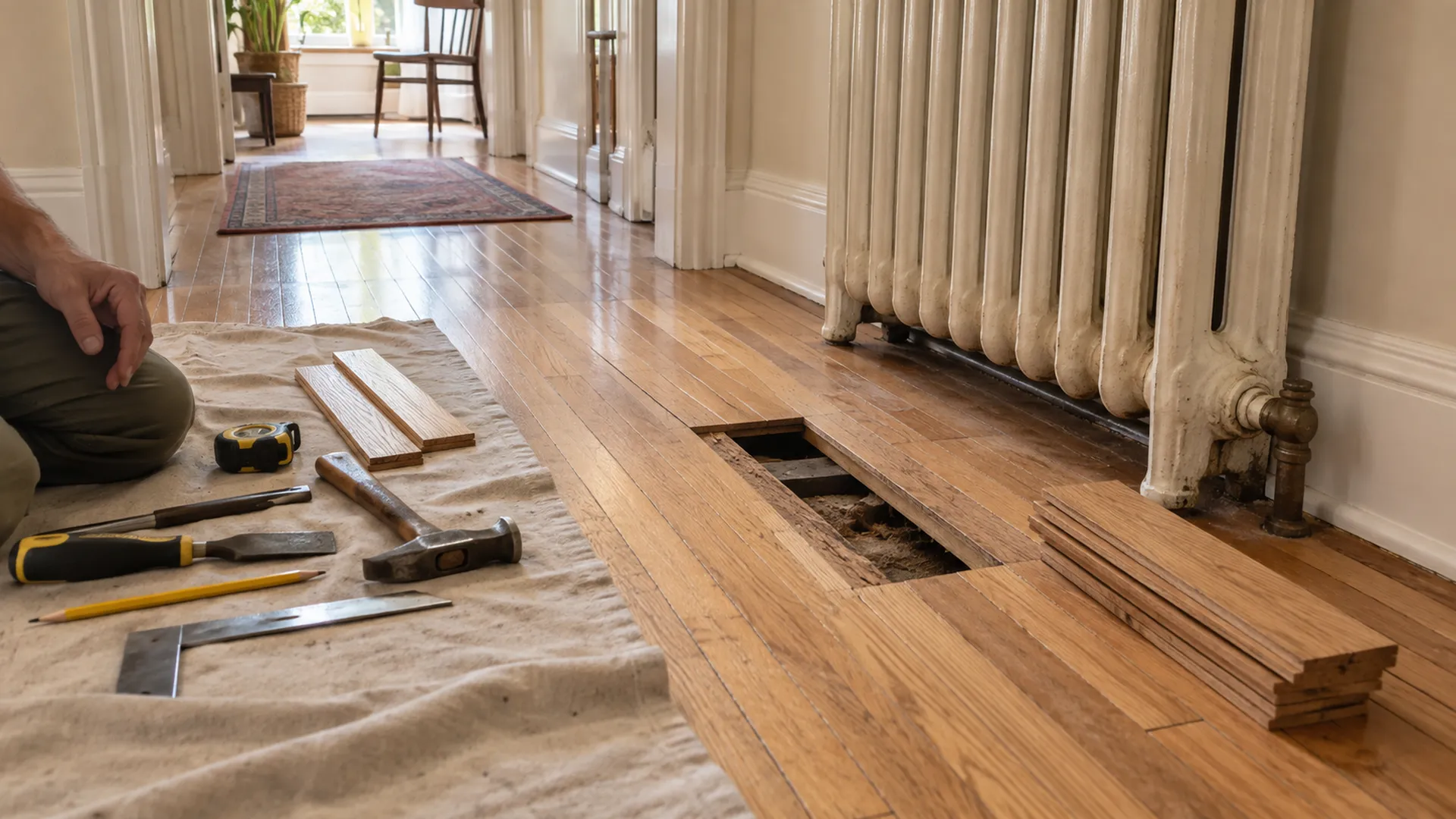
Cupped, stained and soft boards after a leak, gaps, squeaks and damage near radiators, repaired board by board to blend with the floor around them.
Water is the most common reason a good wood floor needs repair: a leak from the apartment upstairs, a radiator valve that dripped all winter, a dishwasher that failed overnight. It rarely means the whole floor has to go.
We repair hardwood and parquet floors in apartments and houses across all five boroughs. We take out the damaged boards, weave new wood into the old so the joints stay staggered, and blend the repair so it is hard to find. The same work fixes gaps, squeaks, split boards, pet damage and the dark stains that build up around radiators.
After a leak: what to do, in order
- Stop the water and tell the building. In an apartment, let the managing agent or superintendent know straight away, because the source may be in another unit or in the pipes behind the wall.
- Get the floor dry. Mop up standing water and move rugs and furniture off the wet area. Fans help. Wood that stays wet can grow mold and keeps swelling.
- Take photos. Photograph the damage and the source before anything is removed. You may need them for your insurer and for the building.
- Let the wood dry out before any repair. Boards that look cupped the day after a leak can flatten a great deal as they dry, and repairing too early can mean doing it twice.
- Then assess and repair. Once the wood has dried, we check which boards have recovered and which need replacing, and quote the repair.
Drying can take days or several weeks, depending on how much water there was and how long it sat. We check the moisture of the wood and the subfloor before we start, so the repair is done once.
Signs of water damage in a wood floor
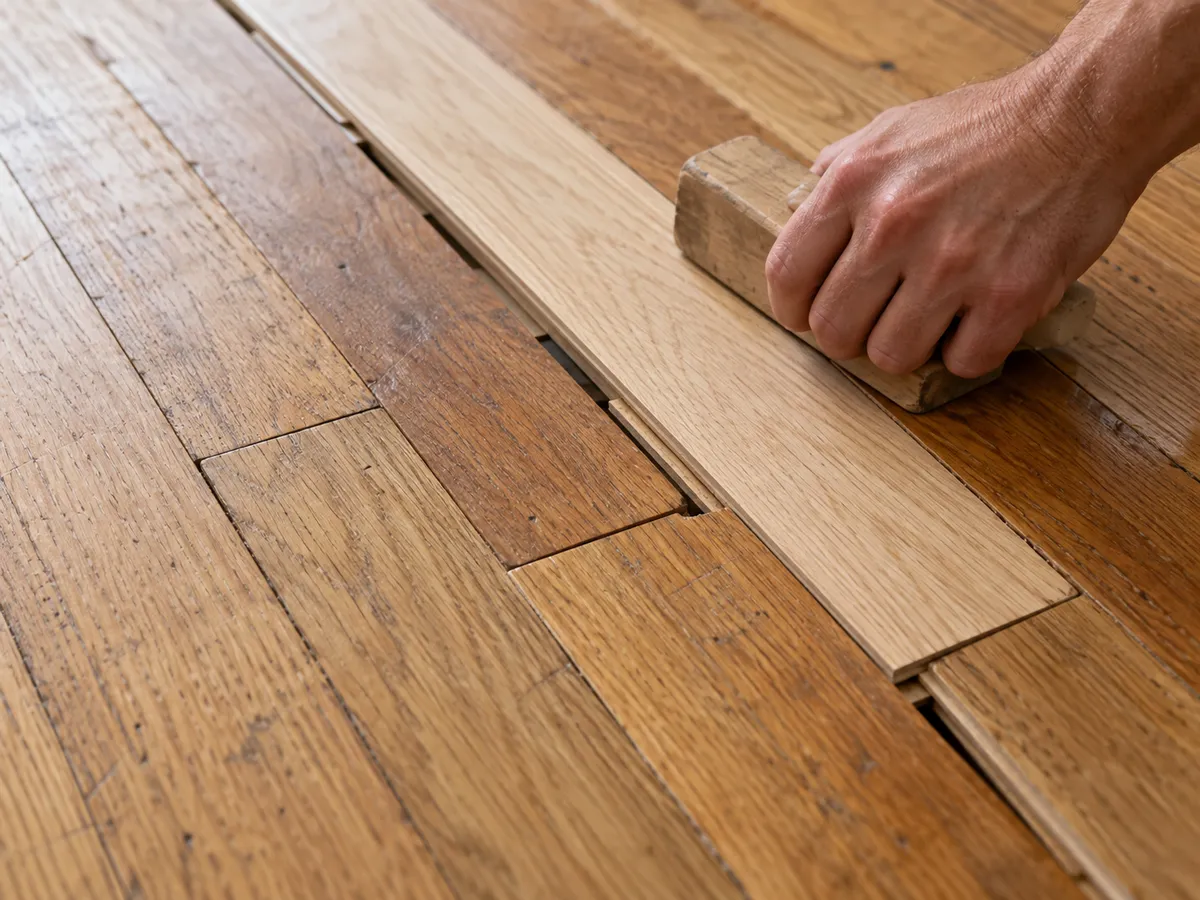
Cupping is when the edges of each board rise higher than the middle, because the underside has taken on water. Crowning is the opposite, with the middle of each board higher than its edges, often after a cupped floor was sanded too soon. Dark stains and gray patches show where water sat on or soaked into the wood. Soft or springy spots can mean the subfloor underneath is damaged too. Gaps and lifting boards can follow once the wood dries and shrinks.
Some of these recover as the floor dries. Others mean the boards, and sometimes part of the subfloor, need to be replaced.
How we repair a wood floor
We cut out the damaged boards cleanly, without disturbing the good ones around them. Where the subfloor is damaged, we repair that first. New boards are then woven in, with their ends staggered to match the pattern of the existing floor, so the repair does not show as a patch.
Matching matters as much as fitting. We match the species, width and thickness of the boards, and on older floors we look for wood that matches the old grain. A new board is always lighter than the boards around it, so in most cases the repaired area, or the whole room, is sanded and refinished so the color blends evenly. That is where a repair meets hardwood floor restoration.
Other wood floor repairs we handle
Gaps between boards
Gaps from dry winter air or old shrinkage are filled or closed up, and loose boards are refastened.
Squeaks and loose boards
We find where boards move against the subfloor and fasten them so they stop squeaking.
Split and damaged boards
Cracked, split or gouged boards are replaced and woven in to match.
Around radiators
Stains and rot where a radiator has leaked are cut out and repaired, and the valve should be fixed first.
Insurance and the building
Whether a water-damaged floor is covered depends on your insurance policy and on where the water came from. In an apartment, the source may be the responsibility of the building or of another unit. Ask your insurer and your managing agent early, keep your photos, and keep any receipts for drying and repair. We can give you a written estimate for the repair to send to them.
What moves the price
A repair depends on how many boards need replacing, whether the subfloor is damaged, how hard the wood is to match, and whether the area or the room needs refinishing afterward to blend in. Pattern floors such as parquet and herringbone take longer to repair than straight boards. We look at the damage, often from photos first, and give you one estimate.
Wood floor repair questions
Can hardwood floors recover from water damage?
Often, yes. Boards that cupped when they got wet can flatten a lot as they dry. Boards that stay stained, soft or badly distorted after drying are replaced and woven in to match.
How long does it take for a wood floor to dry after a leak?
It depends on how much water there was and how long it sat. It can be days or several weeks. We check the moisture of the wood and subfloor before we repair anything.
Does insurance cover water damage to a wood floor?
That depends on your policy and on where the water came from. Ask your insurer and your managing agent, keep photos of the damage and the source, and we can provide a written repair estimate to send them.
Will the repair match the rest of the floor?
We match the species, width and grain as closely as we can and weave the new boards in. Because new wood is lighter, the area is usually refinished so the color blends evenly.
Water on your wood floor? Send us photos.
We will tell you what can be saved and what needs replacing, once the floor has dried.