
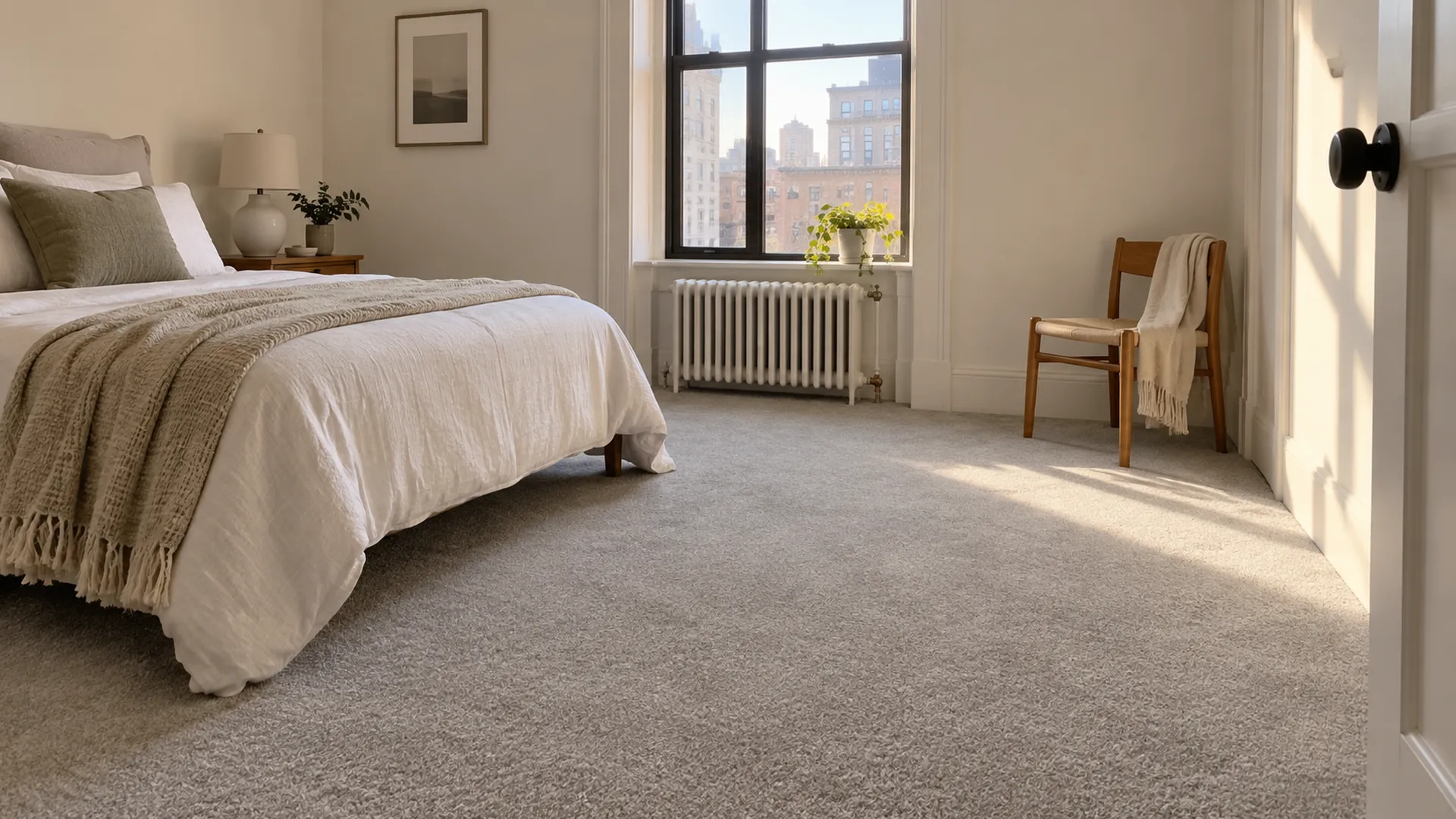
Carpet installation in New York City
Wall-to-wall carpet for bedrooms and living rooms, stair runners for walk-ups and brownstones, and the right padding for comfort and for the unit below.
Carpet is the softest, warmest and quietest floor you can put down. In New York it is often more than a preference. Many leases and co-op house rules ask for most of each room to be covered, and carpet is the simplest way to meet that rule in a bedroom or living room.
We install carpet in apartments, co-ops, condos and houses in all five boroughs. That covers wall-to-wall carpet in bedrooms, living rooms and hallways, and runners on stairs. We measure, take up the old carpet, prepare the floor, lay the padding and stretch the carpet tight so it stays flat for years.
The carpet coverage rule in many New York buildings
Many co-op proprietary leases, and many apartment leases, include a clause that says a set share of each room's floor must be covered with carpet or rugs. The figure most often used is 80 percent. It is a building rule rather than a city law, and it is there to keep noise from reaching the neighbors below. Kitchens, bathrooms and hallways are commonly left out of it.
If you are choosing a floor for a bedroom or living room, read that clause in your lease or house rules first, or ask your managing agent. Wall-to-wall carpet covers the whole room and settles the question. Area rugs over a hard floor can count too, depending on the building. We will help you work out what your rule means for the floor you want.
Padding makes the carpet
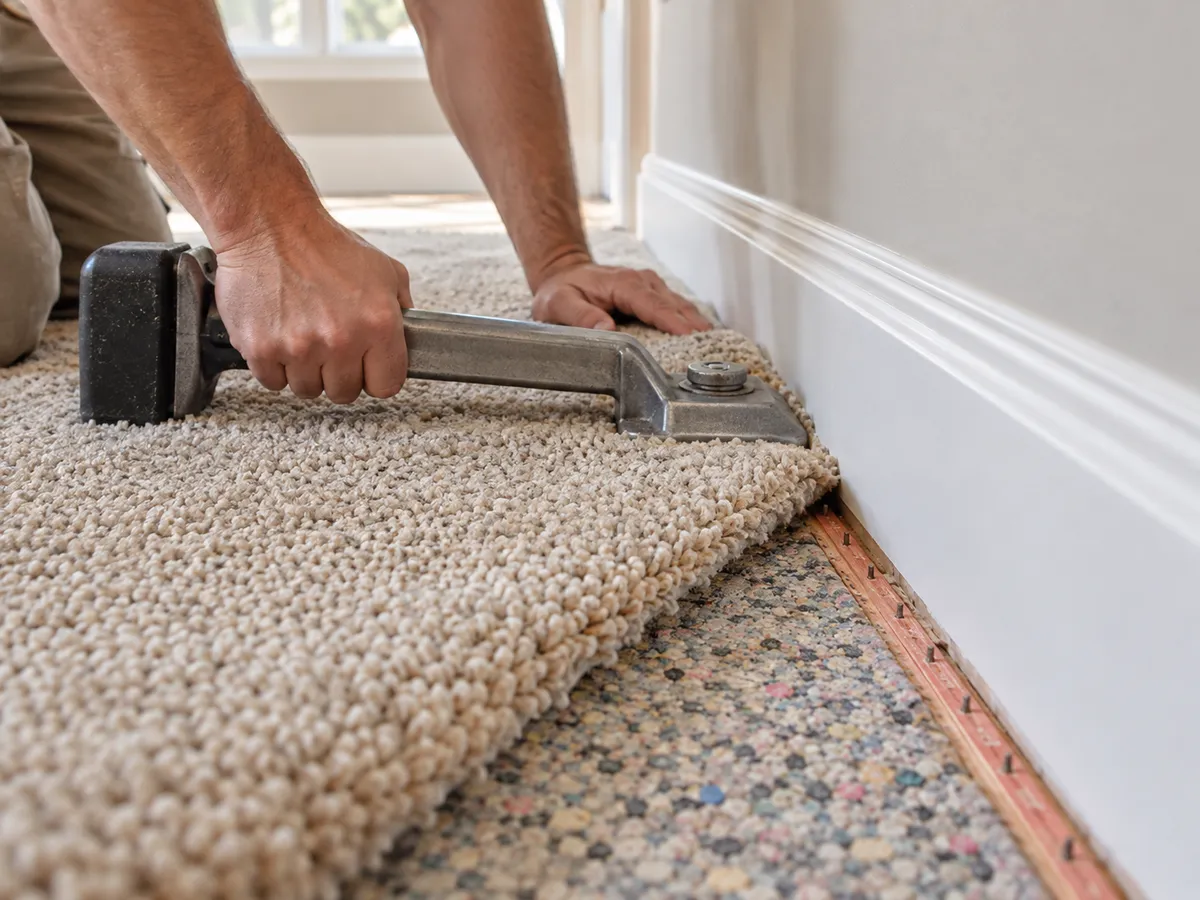
The pad under the carpet does as much work as the carpet itself. It decides how soft the floor feels, how long the carpet lasts, and how much sound reaches the apartment below. A thin, cheap pad wears quickly and lets the carpet flatten in walkways. A denser pad keeps the pile standing and deadens footsteps.
We match the pad to the room and the carpet: firmer under heavy traffic and on stairs, softer in a bedroom. In an apartment, we lean toward a pad that helps with sound, because that is often why the carpet is going down in the first place.
Seams, doorways and stairs
Where a room is wider than a roll of carpet, a seam is needed. We plan seams where they are least visible, away from doorways and main walkways and running with the light from the window, and join them so they lie flat.
At each doorway, the carpet is finished against the next floor with a transition strip, so the edge never frays or lifts. On stairs, each tread and riser is fitted and fastened separately. Walk-ups and brownstone stairs often suit a runner that leaves the wood showing at each side, which adds grip and quiets the stairs without hiding them.
What your carpet installation covers
Measuring
We measure every room and stair and plan the layout and the seams before the carpet is cut.
The old carpet
We take up the old carpet, pad and staples, and take them away.
Tack strip and padding
We fit new tack strip around the room and lay the pad that suits the room and the unit below.
Stretching and finishing
We stretch the carpet tight with a power stretcher, trim it under the baseboard and finish every doorway.
How the day goes
Clear and prepare
Furniture is moved, the old carpet comes up and the floor is cleaned and repaired.
Strip and pad
Tack strip goes around the edges and the pad is laid and fixed.
Lay and stretch
The carpet is laid, seamed where needed and stretched tight onto the strip.
Back in use
Carpet can be walked on straight away. Most rooms are done in a day.
What moves the price
A carpet job depends on the carpet and pad, the size of the rooms, the number of seams, and how many stairs are involved. Taking up old carpet, repairing the floor underneath and moving furniture add to the work, and stairs take longer because each step is fitted by hand. We measure first and give you one estimate that covers all of it.
If you have already bought your carpet, tell us when we speak. We will measure and plan the installation around it.
Carpet installation questions
How long does it take to install carpet?
Most rooms take a few hours, and a typical apartment is usually done in a day. Stairs and larger homes take longer. The room can be used as soon as we finish.
Do I have to have carpet in my apartment?
Many co-op and rental leases require most of each room to be covered with carpet or rugs, often 80 percent, but it depends on your lease or house rules. Check that clause, or ask your managing agent, before choosing a floor.
What should I expect to pay for carpet installation?
It depends on the carpet and pad, the size of the rooms, seams, stairs, and whether old carpet has to come up. We measure first and give you an estimate for the whole job.
Can you install a runner on my stairs?
Yes. We fit runners on walk-up and brownstone stairs, fastened on every step, and wall-to-wall carpet on stairs where you prefer it.
Carpet for a bedroom or stairs? We will measure it.
Send the rooms and the number of stairs, and we will plan the job.