
LVP vs laminate: which floor suits a New York home
The two floors look alike on the shelf and behave differently in the room. How they differ on water, sound, wear and the base, and which one belongs in each room of a New York apartment or house.
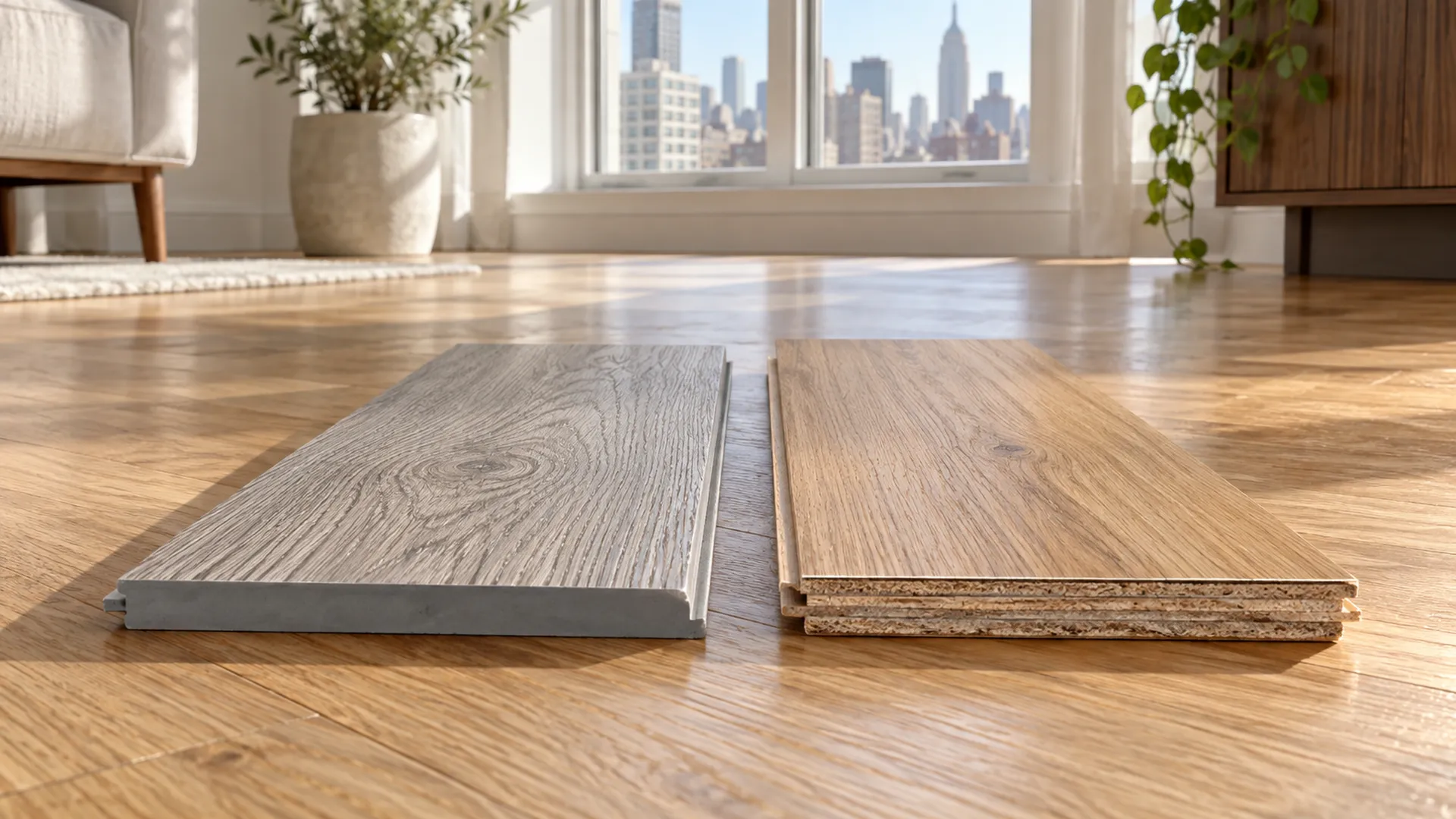
Vinyl plank and laminate look alike on the shelf. Where they differ is the core, and the core decides which rooms each one belongs in.
The short version: luxury vinyl plank, or LVP, has a vinyl core that does not mind water, so it goes in kitchens, bathrooms, basements and anywhere spills and damp are part of life. Laminate has a dense fiberboard core that is very hard to scratch or dent but swells if water sits on it, so it goes in dry rooms: living rooms, bedrooms, hallways and home offices. Many New York homes end up with both, meeting at a doorway. Below is what sits behind that answer.
What each board is made of
Luxury vinyl plank is built in layers. A clear wear layer on top takes the traffic, a printed layer under it carries the wood look, and beneath that is the core, which is vinyl or a vinyl and stone mix sold as SPC or WPC. Some planks have a foam or cork pad attached to the back. Every layer is waterproof, which is the whole point of the floor. Vinyl is also a little softer and warmer to stand on than laminate, and quieter underfoot.
Laminate is built in layers too, but the middle is different. Under the wear layer and the printed image sits a core of high-density fiberboard, which is compressed wood fiber. That core is what makes laminate so firm and so hard to scratch or dent, and it is also what swells when water gets into a joint and stays there. Laminate sold as water-resistant shrugs off a spill wiped up quickly. Standing water is another matter.
The wear layers are comparable. Good laminate is often harder to scratch than good vinyl. Good vinyl is unbothered by a leaking dishwasher. That single difference settles most rooms.
Water, and where it shows up in New York homes
Water is the first question. Kitchens, bathrooms and basements are obvious. Less obvious are the ground floor of a house where the slab can be damp, the room under a window air conditioner that drips, and the hallway where wet boots and umbrellas land in winter. In every one of those, vinyl plank is the safer floor. Laminate belongs where the floor stays dry.
Concrete slabs, common in postwar buildings and newer condos, matter here too. Both floors can float over a slab, but laminate needs a moisture barrier under it because the slab can release damp from below. Vinyl plank is less bothered, and a rigid-core plank is the usual choice straight over a flat, dry slab.
Sound, the neighbor below and the building's rules
In an apartment, a hard floor is also a neighbor question. Footsteps on either floor carry to the unit below unless something soft sits underneath, and many co-op and condo buildings care about how much sound a new floor lets through.
Laminate is the harder and more hollow-sounding of the two, so it leans more on its underlayment. Vinyl plank is softer and slightly quieter on its own, and many planks come with a pad attached. With the right acoustic layer under it, either floor can meet what a building asks. Without one, laminate is the one the neighbors will hear. We choose the underlayment with the building in mind, and we will look at the house rules with you before recommending a product.
Scratches, dents, pets and repairs
For a hallway with a dog, a room with rolling chairs or a family that drags furniture, laminate's dense core is its strength. It is very hard to scratch and it does not dent easily. Vinyl plank has improved a great deal, and a thick wear layer on a rigid core handles most homes well, but a very heavy piece of furniture on a small foot can leave a mark in a softer plank over time.
When a board is damaged, both floors can be repaired by replacing the board rather than the floor. A floating floor makes that easier, whichever material it is. A glued-down vinyl plank takes more work to lift.
Warmth, feel and the look
Vinyl is warmer and softer underfoot, which people notice most in a kitchen where they stand for long stretches, and in a basement. Laminate is firmer and cooler and feels more like a hard floor. Both give a convincing wood look. Laminate often has a sharper, more detailed surface texture. Vinyl comes in wider and longer planks more easily, and rigid-core planks stay flat over small dips that would make a laminate joint click.
What each asks of the base, and what that means for the cost
Both floors are usually floated, and both need a flat, sound base. Laminate is the fussier of the two about flatness and moisture: a hump under a laminate joint opens it, and damp from a slab swells it, so more leveling and a moisture barrier are part of the job more often. Vinyl plank forgives a little more, though a thin flexible plank will still show every dip beneath it, so the base gets the same check either way.
Neither floor is cheap to install badly. What decides the cost is less the material than the room and the base beneath it. What a vinyl plank installation costs walks through the parts of a quote, and the same parts apply to laminate.
Room by room
Kitchen. Vinyl plank. Dropped pans, spills and the dishwasher settle it.
Bathroom. Vinyl plank where the base is flat and the edges can be sealed. Tile where water is on the floor every day.
Basement. Vinyl plank, on a rigid core, once the slab is flat and dry. Laminate below grade is a risk we do not recommend taking.
Living room and dining room. Either. Laminate if the room is dry and sees heavy furniture and traffic. Vinyl if the room opens onto the kitchen and you want one floor running through.
Bedroom. Either, with an area rug where the building asks for floor covering. Laminate is the harder floor, vinyl the warmer one.
Hallway and entry. Laminate for scratch resistance if the entry stays dry. Vinyl if wet boots and umbrellas land there.
Home office. Laminate under a rolling chair, or a rigid-core vinyl with a thick wear layer.
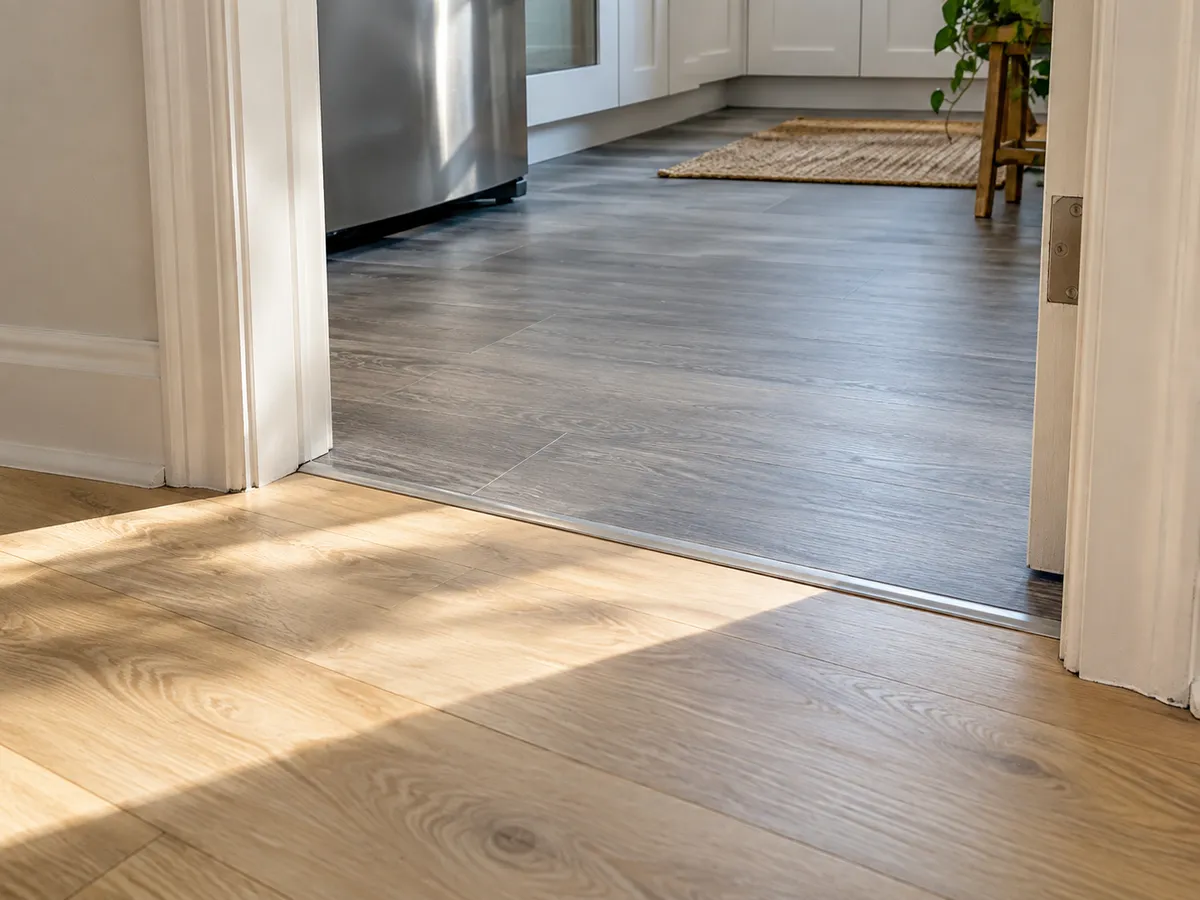
Where the two meet, we fit a low transition so the floors step cleanly into each other at the doorway. If you would like the whole comparison against tile, carpet and hardwood as well, every floor we install, compared sets them side by side.
Choosing for your room
Tell us the room, what is on the floor now and what the building asks for, and we will say which of the two suits it and why. How we install vinyl plank and how we install laminate cover the work on each side. For a recommendation on a specific room, tell us about the room and send a few photos.
Vinyl plank or laminate questions
Is vinyl plank or laminate better for a kitchen?
Vinyl plank. A kitchen floor sees spills, dropped pans and the occasional leak from a dishwasher or a refrigerator line, and vinyl's core is waterproof through and through. Laminate handles a spill wiped up quickly but swells if water sits in a joint.
Which is quieter for the apartment below, vinyl plank or laminate?
Vinyl plank is softer and a little quieter on its own, and many planks come with a pad attached. Laminate is harder and leans more on its underlayment. With a good acoustic layer under it, either floor can meet what a building asks for.
Which lasts longer, vinyl plank or laminate?
In a dry room with heavy traffic, good laminate is very hard to scratch or dent and lasts well. In a room that sees water, vinyl plank outlasts it, because water is what ends a laminate floor. The wear layer and the core decide it as much as the material name does.
Not sure which one your room needs? Ask us.
Send the room, a photo of the floor you have now and your building's rules, and we will tell you which floor suits it.