
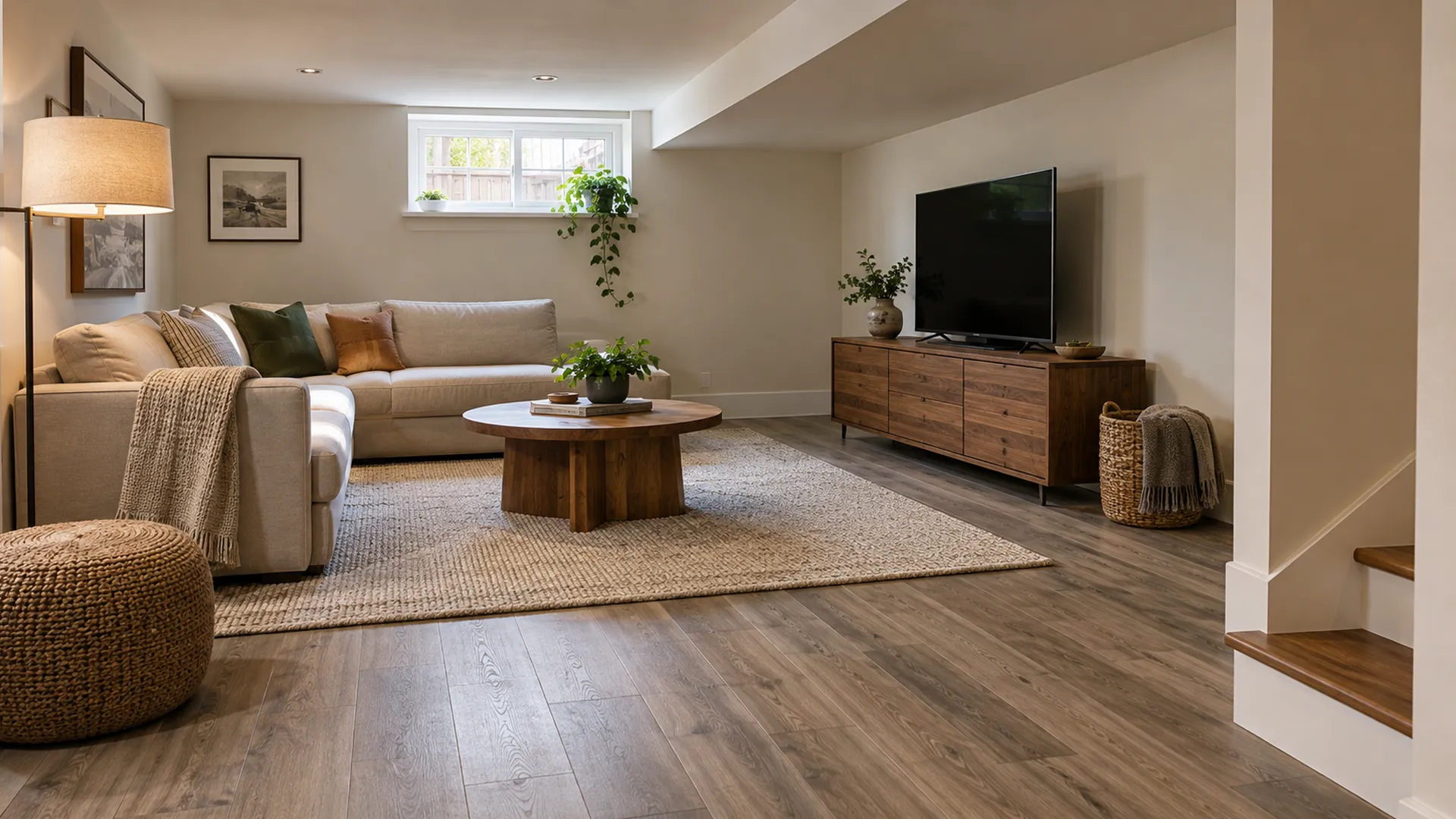
The best flooring for a basement in New York
Below grade, moisture decides everything. Which floors work on a New York basement slab, which do not, what the slab needs first, and one recommendation for each way you might use the room.
For most New York basements the answer is rigid-core luxury vinyl plank. Porcelain tile where water is likely. Everything else depends on how dry the slab really is.
A basement floor in a New York house sits on a concrete slab, below the level of the ground outside. That slab can draw damp from the soil around it, the ceiling above it is often low, and at some point in the house's life water may have come in. So the question is not which floor looks best. It is which floor can live on that slab, in that room, for years. This guide answers it and then points you to the right service page. How every floor we install compares covers the same floors for the rooms upstairs.
Read the basement before you choose a floor
Four things about the room decide the floor.
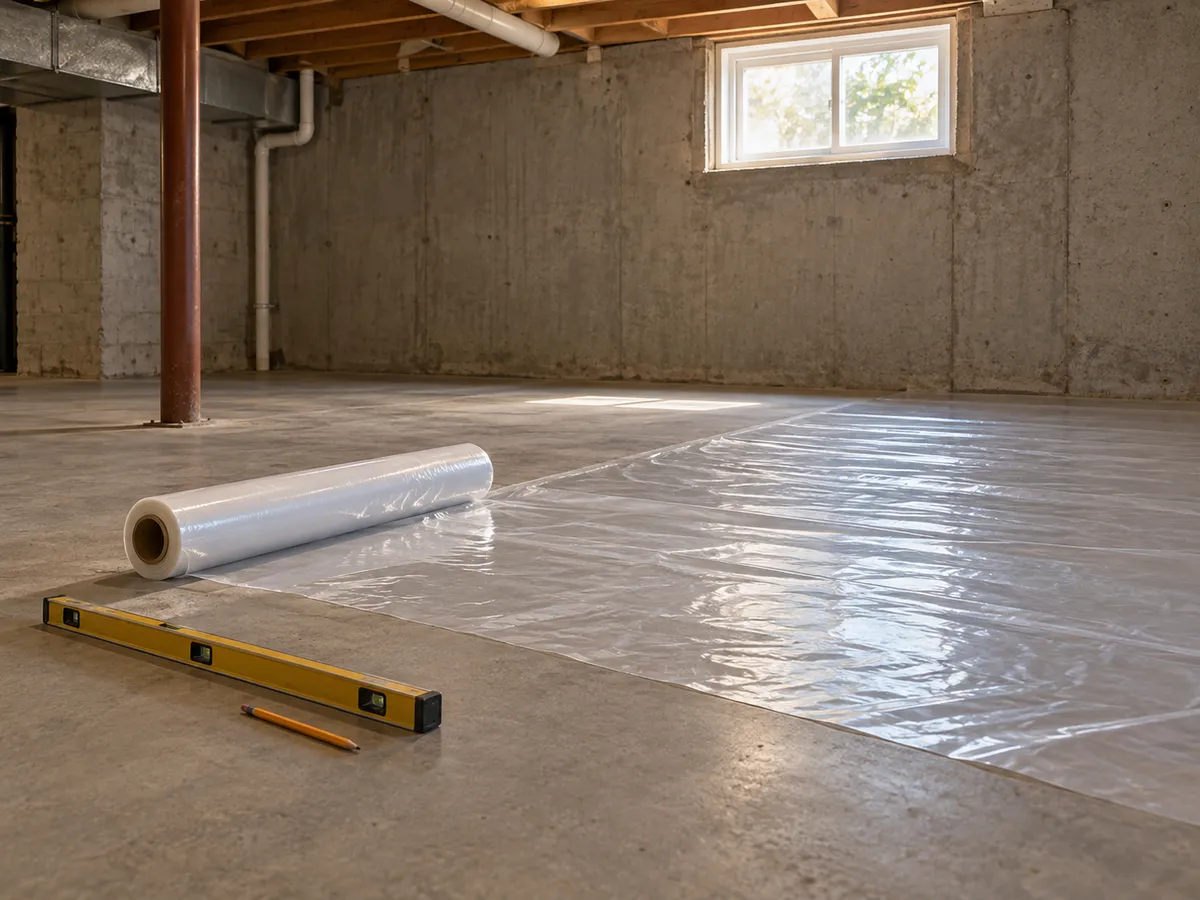
What the slab is doing. Concrete is not waterproof. A slab in a dry, well-drained basement stays dry to the touch. A slab in a damp one releases moisture from below all year, and a floor that traps that moisture will fail. A simple test is to tape a square of plastic sheet to the concrete for a day or two and see whether the underside beads with water. We check the slab on the first visit.
Whether water has ever come in. A basement that has flooded once may flood again, from a storm, a backed-up drain or a water heater. In that basement, choose a floor that can be dried out or lifted and relaid, and avoid anything that soaks water up and holds it.
Height at the stairs and doors. A new floor raises the level. The bottom step of the stairs gets shorter by the thickness of the floor, and a door to a boiler room or a bathroom may need trimming. Thin floors keep this simple. A thick tile assembly changes it more.
What the room is for. A family room or a home office wants warmth and comfort underfoot. A laundry, a workshop or a room with a utility sink wants a floor that does not care about water. A home gym wants a hard, flat floor that takes weight. The right floor is different for each.
The floors, compared for a basement
| Floor | Damp slab | After a flood | Warmth and feel | Below grade |
|---|---|---|---|---|
| Rigid-core luxury vinyl plank | Copes well over a flat slab | Can be lifted, dried and relaid | Warmer than tile, slightly soft | The first choice for most basements |
| Porcelain tile | Unaffected | Unaffected | Hard and cool, warmer with a rug | The choice where water is likely |
| Carpet | Only over a dry slab with the right pad | Usually has to come out | The warmest and softest | For a dry basement used as a bedroom or den |
| Laminate | Needs a moisture barrier and a truly dry slab | Swells and has to come out | Firm | A risk below grade |
| Engineered wood | Only over a dry slab, glued or floated with a barrier | Usually has to come out | Warm, the real wood look | For a proven dry basement only |
| Solid hardwood | Not suited to a slab | Ruined | Warm | Not below grade |
Rigid-core vinyl plank earns the top spot because it does not mind moisture, it feels warmer than tile, it floats over a flat slab without adhesive, and if the worst happens it can be taken up, dried and put back. The rigid core matters: a thin, flexible plank shows every dip in an old slab, and a rigid one bridges the small ones. Our vinyl plank installation covers how it goes down.
Porcelain tile is the floor for a laundry room, a basement bathroom, a mudroom entrance from the yard, or any basement that has taken water before. Nothing happens to it when it gets wet. It is cool underfoot, so a rug goes down in the sitting area. A porcelain tile floor needs a stiff, flat, clean slab and a waterproof layer where the room calls for it.
Carpet is the warmest and quietest floor, and in a dry basement used as a bedroom or a den it is a fair choice over a good pad. On a damp slab, or in a basement that has flooded, carpet and its pad soak up water and hold it, and they usually have to come out. If you want soft underfoot in a basement, carpet over a good pad is for a slab that has proved itself dry, and area rugs over vinyl plank are the safer route everywhere else.
Laminate is the floor people most often want to put in a basement and the one we are most cautious about. Its fiberboard core swells when water gets into a joint, and below grade water arrives from underneath as well as from above. It can work over a truly dry slab with a moisture barrier, but vinyl plank gives the same look with none of the worry. Vinyl plank and laminate compared has the full comparison.
Engineered wood can go over a slab, glued down or floated over a barrier, and it brings real wood into a basement. It belongs only in a basement that has been dry for years and has good drainage outside. Solid hardwood does not belong below grade at all: it cannot be nailed to concrete and it moves too much with the moisture.
What the slab needs before any floor goes down
Whatever floor you choose, the slab is prepared first, and this is where most of the work in a basement job sits.
Clean and sound. Old paint, adhesive residue and crumbling patches come off. Cracks are filled. A slab that is breaking up needs repair before anything covers it.
Flat. Old slabs are rarely level. Low spots are filled with leveling compound and high spots are ground down, because vinyl plank shows every dip and tile cracks over a hump.
Dry, or protected. Over a slab that releases moisture, a barrier goes down before the floor. Some rigid-core planks are laid straight over a flat, dry slab. Laminate and engineered wood always get a barrier.
The old floor. Many New York basements still have nine-inch vinyl tiles and black adhesive from decades ago. Materials like these may contain asbestos, so they are tested before anyone lifts them, and the usual answer is to leave them in place and go over them with a new, flat base rather than take them up. That is often the simplest and safest option for a basement, and it keeps the job moving.
Height. We plan the finished height against the bottom stair, any doors and the transition at the top of the basement stairs before the first plank goes down, so nothing trips and every door still swings.
What moves the cost of a basement floor
A basement floor is priced like any other: the material, the size of the room, and what the base needs. In a basement the third part is usually the largest. Leveling an old slab, adding a moisture barrier, repairing cracks and working around a boiler, a sump pit or exposed pipes all add to the job. Getting materials down a narrow basement stair takes time too. Porcelain tile usually costs more to install than vinyl plank, because the base has to be stiffer and flatter and the setting is slower. We look at the slab and measure first, then give you one estimate that covers the preparation and the floor.
Our recommendation, by how you use the room
Family room, playroom or home office: rigid-core vinyl plank, with a rug where you sit.
Guest bedroom or den in a dry basement: vinyl plank, or carpet over a good pad if the slab has proved itself dry.
Laundry, utility room, or a basement that has flooded: porcelain tile, or vinyl plank you are prepared to lift and relay.
Basement bathroom or an entrance from the yard: porcelain tile.
Home gym: vinyl plank on a rigid core, or tile under a rubber mat.
If you are not sure what your slab is doing, send a photo of the slab and the room, and tell us whether the basement has ever taken water. We will tell you which floor it can carry and what it needs first.
Basement flooring questions
Can vinyl plank go straight onto a concrete basement floor?
Often, yes. A rigid-core plank floats over a slab that is clean, flat and dry, with the underlayment the plank calls for. If the slab is uneven it is leveled first, and if it releases moisture a barrier goes down before the floor. We check both on the first visit.
Is carpet a bad idea in a basement?
Over a damp slab, or in a basement that has flooded, yes: carpet and its pad hold water and usually have to come out. Over a slab that has stayed dry for years, carpet with the right pad is a warm, quiet floor for a bedroom or den. Area rugs over vinyl plank give the softness without the risk.
Should the basement be tested for moisture before a new floor?
Yes. A slab that looks dry can still release moisture from below, and that is what ruins a basement floor. A simple plastic-sheet test over a day or two shows it, and we check the slab as part of the first visit before recommending a floor.
Finishing a basement? Start with the slab.
Send a photo of the floor you have now and tell us how the room will be used. We will say which floor suits it.